Where I work
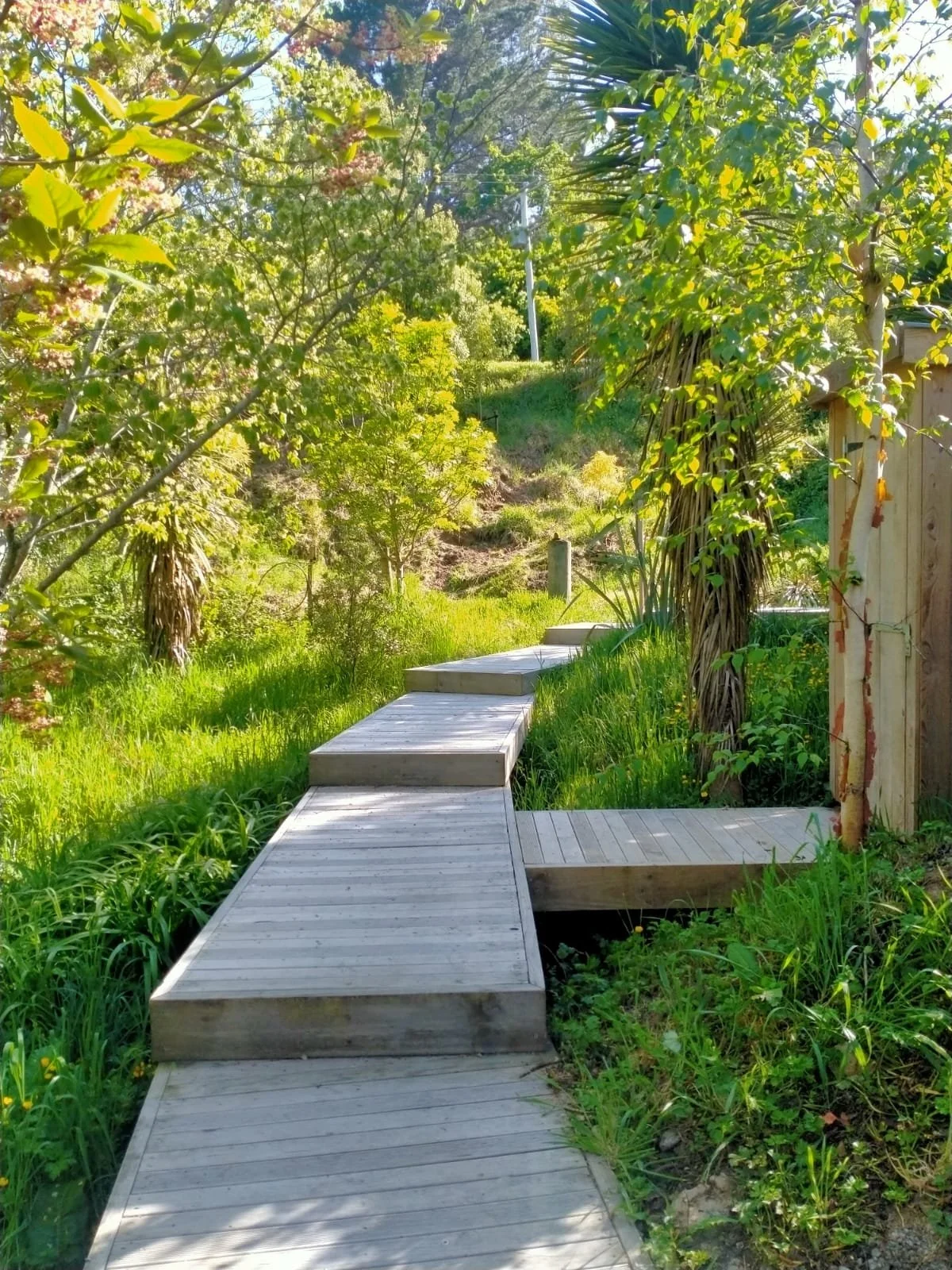
I work from a studio that one of my friends named Starling Cottage, in Ōhinetahi Valley, just next to Governor’s Bay, and about a twenty-minute drive south of Ōtautahi/Christchurch.
Although a bit of a drive, many clients come to value the journey and location as an important part of their healing process and experience.
Ōhinetahi means “the place of the one daughter”, named after a Kāi Tahu chief, Manuhiri, who lived in this area and had several sons but only one daughter. It was originally settled by Waitaha, Kāti Māmoe, and Kāi Tahu, respectively.
The land was “bought” by European settlers as part of the infamous Kemp’s Deed purchase (see here for more). Local Māori then relocated (or were relocated) to the (pitifully small) native reserves at Rāpaki and Pūrau. The Valley was further denuded of local forest and bush, and became used, predominantly, for pastoral grazing.
An Anglican Church, St Cuthbert’s, was erected in 1860. Severely damaged in the 2010/2011 Christchurch earthquakes, it has been subsequently, lovingly restored.
For a period, Ōhinetahi was the home of T.H. Potts, an early English settler, run-holder, naturalist, and one of Pākehā New Zealand’s earliest conservationists. Potts planted many trees from seeds he brought out from Kew Gardens, London, including oak, cedar, beech, and dawn redwood. Recent settlers, such as myself and our family, have gone on planting, both introduced and native species.
From being cleared, bare land in the 1900s, Ōhinetahi has recovered to become one of the most wooded valleys in the Whakaraupō/Lyttelton Harbour area. It forms a rich sanctuary and feeding ground for kererū/wood pigeon, korimako/bellbird, kahu/hawk, pīwakawaka/fantail, pūkeko/swamphen, pūtangitangi/paradise ducks, as well as starlings, blackbirds, sparrows, thrushes, finches, swallows, magpies, silvereyes, grey warblers, rock pigeons, seagulls, California quail, and the occasional pīpīwharauroa/shining cuckoo and ruru/morepork. Many seabirds can be spotted along the Valley foreshore, including kingfisher/kōtare, oystercatcher/tōrea, royal spoonbill/kōtuku ngutupapa, pied stilt/poaka, godwit/kuaka, white-faced heron/matuku moana, black-billed gull/tarāpuka, red-billed gull/tarāpunga, southern black backed gull/karoro, and mallard duck/rakiraki.
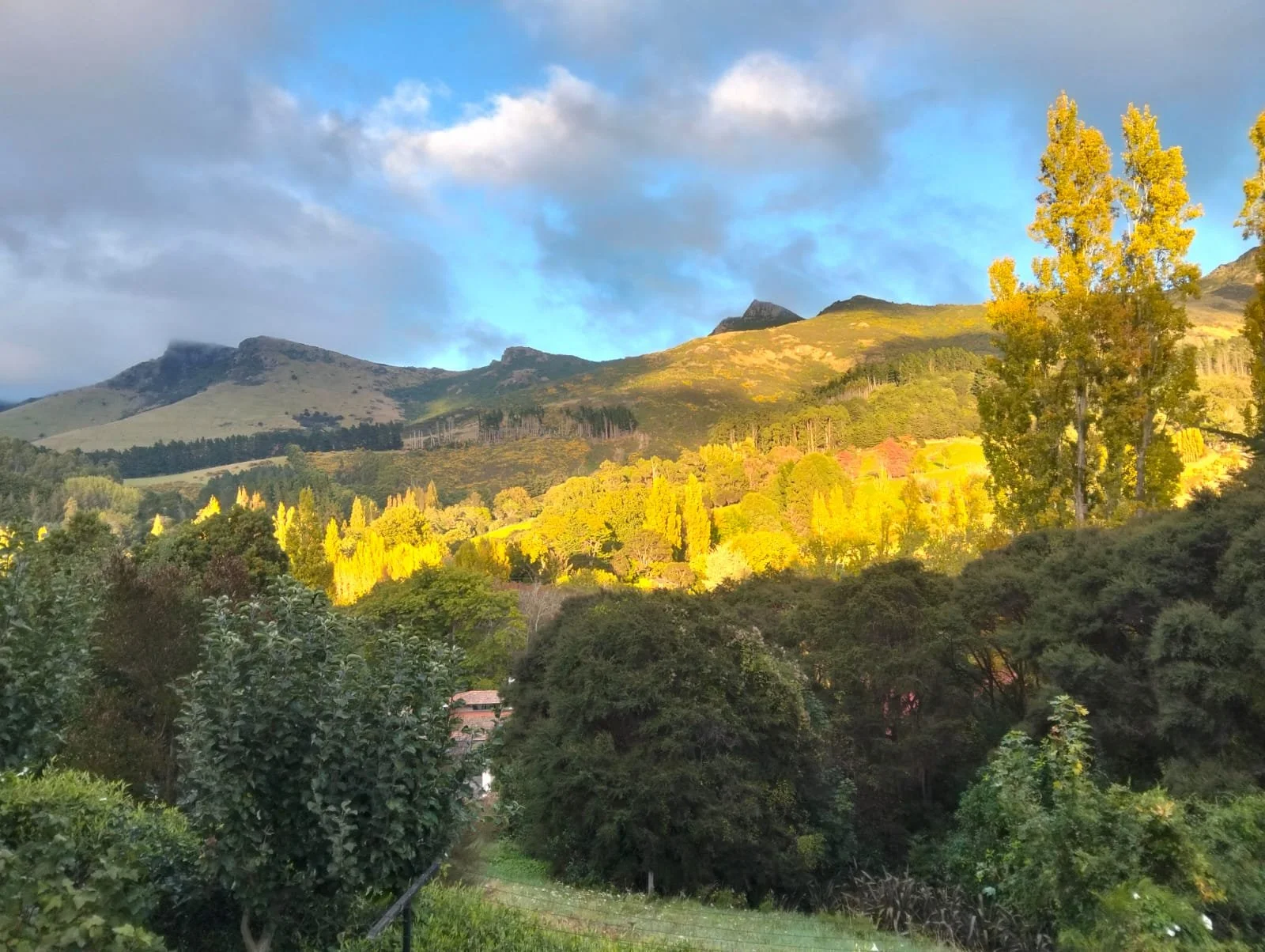
The studio where I work from looks up to a series of peaks and rocky outcrops known as the Seven Sleepers, Seven Watchers, or Seven Sisters. In terms of the latter, according to Maurice Manawaroa Gray, these peaks were named by early Māori after stars in the Matariki or Pleiades constellation.
I also call the studio where I work from Beaconview, after a much loved family home that my ancestors lived in in Little Salkeld, Cumbria.
I moved my psychotherapy practice to the Valley in 2024, partly to be close to home (I have two young children), but also to share this special place with others. I find it useful to think of the environment as a “third” active presence in the process of therapy, although perhaps this way of thinking doesn’t go far enough. Like many modern Westerners, I am “in recovery” from the paradigm/illness that we are separate from, and above, the natural world.